EdgeStar Wine Cooler: Complete Guide
Post Disclaimer
*We may earn a commission for purchases made using our links. Please see our disclosure to learn more.
Wine storage requires precision, consistency, and reliability. For wine enthusiasts seeking professional-grade cooling without the commercial price tag, EdgeStar wine coolers have emerged as a compelling option in the home wine preservation market. These appliances bridge the gap between basic wine fridges and high-end cellaring systems, offering temperature control, humidity management, and UV protection essential for maintaining wine quality.
“Proper wine storage temperature is perhaps the single most important factor in preserving wine quality over time. Fluctuations of even a few degrees can accelerate aging or cause premature deterioration of delicate flavor compounds.”
— Wine Spectator
Key Takeaways
- EdgeStar wine coolers offer dual-zone temperature control, allowing simultaneous storage of red and white wines at their optimal temperatures
- Capacity ranges from compact 12-bottle units to expansive 166-bottle models, accommodating various collection sizes and space requirements
- Thermoelectric and compressor-based cooling systems each provide distinct advantages for different environments and noise preferences
- UV-resistant glass doors and vibration reduction technology protect wine from light damage and sediment disturbance
- Price points typically range from $200 to $1,500, making professional wine storage accessible for serious collectors and casual enthusiasts alike
Recommended EdgeStar Wine Cooler Products
EdgeStar CWR302SZ Wine Cooler
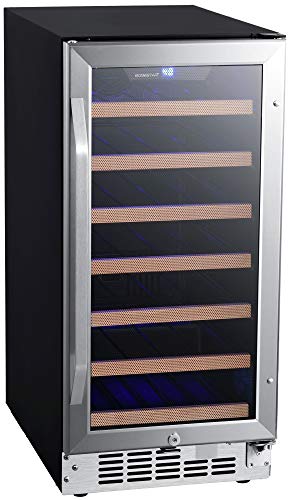

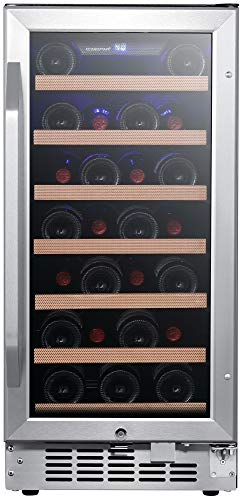
The EdgeStar CWR302SZ wine cooler is a compact yet powerful 15-inch built-in wine refrigerator designed to store up to 25 standard Bordeaux bottles. It features a single-zone cooling system with a precise temperature range of 40–65°F, making it ideal for preserving red or white wines at consistent conditions. The stainless steel finish, reversible lockable glass door, and blue LED interior lighting give it a sleek, modern look suitable for undercounter or freestanding installation. With vibration-reducing technology, auto defrost, and a built-in carbon filter, this EdgeStar wine cooler ensures your collection is stored quietly, cleanly, and efficiently.
The EdgeStar CWR302SZ Wine Cooler is an excellent choice for wine enthusiasts who need reliable storage without sacrificing space or style. Designed with versatility in mind, this 15-inch unit can be installed under a countertop or used as a freestanding wine fridge, making it perfect for apartments, kitchens, home bars, or entertainment areas.
- Compact Built-In Design: Fits seamlessly under counters or works as a freestanding unit.
- Stable Temperature Control: Single-zone cooling with digital controls and alarms for reliability.
- Quiet Operation: Rubber bushings minimize vibration and compressor noise.
- Bottle Size Limitation: Full 25-bottle capacity applies only to standard 750ml Bordeaux bottles.
- Single Zone Only: Not ideal for storing reds and whites at different temperatures.
- Shelf Adjustment Required: Larger bottles may require removing a shelf.
EdgeStar CWF380DZ Wine Cooler


The EdgeStar CWF380DZ Wine Cooler is a spacious 19-inch freestanding wine refrigerator designed to hold up to 38 standard Bordeaux bottles. Featuring dual independent temperature zones ranging from 40–65°F, it allows you to store red and white wines at their ideal serving conditions. The stainless steel exterior, towel bar handle, and wire racks with wood faces deliver a refined look, while digital temperature controls and built-in security lock add convenience and peace of mind. With compressor-based cooling and frost-free operation, this EdgeStar wine cooler offers reliable performance for everyday wine storage.
The EdgeStar CWF380DZ Wine Cooler is an excellent option for wine enthusiasts seeking flexible temperature control and generous storage in a freestanding design. Its dual-zone configuration allows both upper and lower compartments to operate independently, making it easy to preserve different wine varieties at optimal temperatures.
- Dual Temperature Zones: Store red and white wines separately with independent controls.
- Large Bottle Capacity: Holds up to 38 standard bottles for growing collections.
- User-Friendly Features: Includes digital controls, alarms, and a built-in security lock.
- Freestanding Only: Not designed for built-in or undercounter installation.
- Bottle Size Restrictions: Larger bottles reduce total storage capacity.
- Heavier Unit: At 94 lbs, it may require assistance during setup.
EdgeStar CWF440SZ Wine Cooler

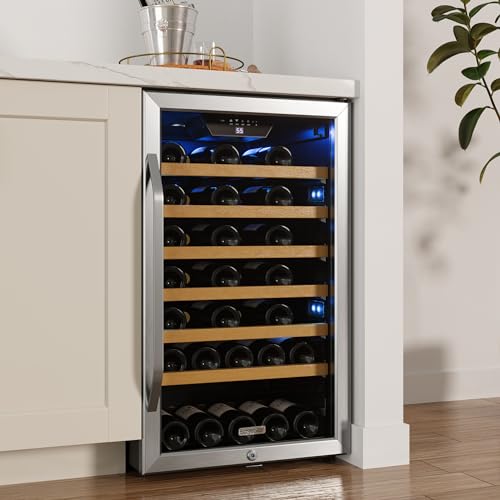

The EdgeStar CWF440SZ Wine Cooler is a spacious 20-inch freestanding wine refrigerator designed to store up to 44 standard Bordeaux bottles. Its single-zone cooling system maintains a consistent temperature between 40–65°F, making it suitable for keeping red or white wines properly chilled. With a stainless steel exterior, reversible lockable door, and towel bar handle, this unit blends modern style with practical functionality. Blue LED interior lighting, adjustable shelves with wood faces, and digital temperature controls make this EdgeStar wine cooler an excellent choice for home bars, dining rooms, or entertainment spaces.
The EdgeStar CWF440SZ Wine Cooler is designed for wine enthusiasts who want generous storage capacity without the complexity of dual-zone systems. Its single-zone compressor cooling maintains stable temperatures between 40°F and 65°F, helping preserve flavor and aroma over time.
- High Bottle Capacity: Stores up to 44 bottles in a compact freestanding design.
- Consistent Cooling: Single-zone temperature control with digital settings.
- Attractive Presentation: Blue LED lighting and wood-accented shelves enhance display.
- Freestanding Only: Not suitable for built-in or undercounter installation.
- Single Zone Limitation: Cannot store different wine types at separate temperatures.
- Bottle Size Constraint: Larger bottles require removing a shelf.
EdgeStar BWR301BL Wine Cooler


The EdgeStar BWR301BL Wine Cooler is a sleek 15-inch wine refrigerator designed for built-in or freestanding installation where space is limited. With a capacity of up to 30 standard Bordeaux bottles, this slim wine cooler offers efficient single-zone cooling with a temperature range of 40–65°F. Its black finish and double-paned tempered glass door deliver a clean, modern look, while the LED display allows for easy temperature monitoring. Equipped with compressor-based cooling, auto defrost, and vibration-reducing rubber bushings, this EdgeStar wine cooler ensures stable storage conditions for your wine collection.
The EdgeStar BWR301BL Wine Cooler is built for wine enthusiasts who need maximum storage in a compact footprint. Its powerful compressor-based cooling system works with an internal circulation fan to maintain consistent temperatures throughout the cabinet, helping preserve flavor and aroma over time.
- Slim Built-In Design: Ideal for tight spaces while still offering generous bottle capacity.
- Quiet Operation: Vibration-dampening technology helps protect wine sediment.
- Flexible Installation: Suitable for both built-in and freestanding use.
- Bottle Size Limitation: Designed for standard 750ml Bordeaux bottles only.
- Single Zone Cooling: Not suitable for storing multiple wine types at different temperatures.
- Wire Shelving: May feel less premium compared to wood-front shelves.
Understanding EdgeStar Wine Cooler Technology
Wine preservation depends on four critical environmental factors: temperature stability, humidity control, light protection, and vibration minimization. EdgeStar wine coolers address each of these requirements through engineered design features that replicate traditional cellar conditions within a compact appliance format.
Temperature stability prevents premature aging and oxidation. EdgeStar models typically offer temperature ranges between 40°F and 65°F, covering the spectrum from champagne service temperature to full-bodied red wine storage. Dual-zone configurations enable simultaneous storage of whites at 45-50°F and reds at 55-65°F, eliminating compromise and ensuring each bottle matures under optimal conditions.
Humidity management maintains cork integrity. EdgeStar wine coolers generate appropriate moisture levels through their cooling processes, preventing cork desiccation that leads to oxidation. Properly hydrated corks remain expanded within bottle necks, creating airtight seals that protect wine from atmospheric exposure.
UV protection shields wine from light damage. Direct sunlight and fluorescent lighting generate wavelengths that degrade organic compounds in wine, creating off-flavors and unpleasant aromas. EdgeStar coolers incorporate tinted glass doors and UV-resistant materials that filter harmful wavelengths while allowing visual access to stored bottles. LED interior lighting provides illumination without heat generation or UV emission.
Vibration reduction preserves sediment structure. Constant movement disrupts natural settling processes and can disturb chemical bonds in aging wine. Thermoelectric models eliminate compressor vibration entirely, while compressor-based units incorporate dampening systems that minimize mechanical disturbance.
Thermoelectric vs Compressor Cooling Systems
EdgeStar offers both thermoelectric and compressor-based cooling technologies, each suited to different applications and environments. Understanding the distinctions helps consumers select appropriate systems for their specific needs.
Thermoelectric cooling utilizes the Peltier effect, passing electrical current through dissimilar conductors to create temperature differential. This solid-state technology operates without moving parts, generating zero vibration and minimal noise. Thermoelectric EdgeStar wine coolers excel in bedrooms, offices, and living spaces where silent operation enhances comfort. The technology proves energy-efficient for smaller capacity units storing fewer than 20 bottles.
However, thermoelectric cooling carries limitations. These systems cool relative to ambient temperature, typically achieving 15-20°F below room temperature. In hot climates or non-air-conditioned spaces, thermoelectric models may struggle to reach lower temperature ranges necessary for white wine and champagne storage. The cooling capacity also limits practical applications to compact units, making thermoelectric systems less suitable for large collections.
Compressor-based cooling employs traditional refrigeration cycles using refrigerant, condenser coils, and mechanical compression. This proven technology delivers powerful, consistent cooling regardless of ambient conditions. Compressor EdgeStar wine coolers maintain precise temperatures even in garages, basements, or warm environments where thermoelectric units would fail. The robust cooling capacity enables larger designs accommodating extensive collections exceeding 100 bottles.
Compressor systems generate more operational noise than thermoelectric alternatives, though modern EdgeStar models incorporate sound-dampening features that minimize disturbance. The mechanical components also introduce slight vibration, addressed through rubber mounting systems and isolation platforms that prevent transmission to stored bottles. Energy consumption runs higher than thermoelectric units for comparable capacity, though efficiency improvements have narrowed this gap.
Capacity Considerations and Space Planning
Selecting appropriate capacity requires honest assessment of current collection size and anticipated growth. EdgeStar wine coolers range from compact 12-bottle units measuring 18 inches tall to expansive 166-bottle cellars standing over 70 inches. Matching capacity to actual needs prevents wasted space and excessive energy consumption while ensuring adequate room for collection expansion.
Small capacity models (12-28 bottles) suit casual wine drinkers maintaining rotation inventory rather than aging collections. These compact units fit countertops, under-counter installations, or tight spaces in apartments and condos. The smaller footprint facilitates placement in dining rooms, kitchens, or home bars where convenient access enhances entertaining.
Medium capacity models (28-50 bottles) accommodate growing collections and serious enthusiasts who purchase wine by the case. These mid-sized units balance storage volume with reasonable dimensions that fit standard kitchen alcoves or dedicated beverage areas. Dual-zone temperature control becomes particularly valuable at this capacity, enabling proper storage for diverse wine varieties.
Large capacity models (50-166+ bottles) serve collectors building inventories for long-term aging. These substantial units require dedicated floor space and often function as focal points in wine rooms, basements, or climate-controlled storage areas. Multiple temperature zones, extensive shelving configurations, and commercial-grade components support serious collecting habits and investment-grade bottles requiring decades of cellaring.
Bottle capacity ratings assume standard 750ml Bordeaux bottles with traditional shoulder profiles. Irregular bottle shapes including Burgundy, Champagne, German Riesling, and specialty formats may reduce actual capacity by 10-20%. Planning for this variation prevents overcrowding and ensures adequate air circulation around stored bottles.
Installation Options and Design Integration
EdgeStar manufactures freestanding and built-in wine cooler models, each offering distinct installation advantages. Understanding the differences ensures proper selection for specific spaces and design goals.
Freestanding wine coolers operate as independent appliances requiring only electrical connection and adequate ventilation clearance. Front ventilation designs allow placement against walls, while side and rear ventilation models need minimum spacing for airflow. Freestanding units offer maximum flexibility, enabling repositioning when rearranging spaces or relocating homes. Finished sides and attractive door designs allow standalone presentation without cabinetry integration.
Built-in wine coolers install flush within cabinetry, creating seamless integration with kitchen or bar designs. Front ventilation systems exhaust heat through toe-kick grilles, eliminating clearance requirements that would gap freestanding units from surrounding cabinets. Built-in models typically feature finished fronts and trim kits that match cabinet profiles. The permanent installation approach suits homeowners committed to dedicated wine storage locations.
Some EdgeStar models offer convertible designs functioning as either freestanding or built-in units. These versatile options accommodate changing needs and installation circumstances, though they may command premium pricing compared to dedicated single-purpose models.
Reversible door hinges provide left or right opening configurations, optimizing traffic flow and accessibility in constrained spaces. Field-reversible designs enable installers to adjust swing direction during installation, while factory-set models require specification at purchase.
Door handle styles range from integrated recessed grips to prominent bar handles and professional-grade commercial pulls. Handle selection impacts overall aesthetic and should coordinate with surrounding appliances and hardware finishes. Stainless steel, black stainless, and polished chrome finishes match contemporary kitchen designs, while custom panel-ready models accept decorative panels matching cabinetry.
Temperature Zones and Wine Storage Requirements
Different wine varieties require distinct storage temperatures for optimal preservation and aging. Understanding these requirements helps maximize the utility of dual-zone EdgeStar wine cooler configurations.
Red wines store best between 55°F and 65°F. Full-bodied varieties like Cabernet Sauvignon, Merlot, and Syrah develop complex flavors at the warmer end of this range, around 60-65°F. Lighter reds including Pinot Noir and Beaujolais prefer slightly cooler temperatures of 55-60°F. These conditions slow oxidation while allowing gradual flavor development through controlled aging processes.
White wines require cooler storage between 45°F and 55°F. Crisp, acidic varieties like Sauvignon Blanc, Pinot Grigio, and unoaked Chardonnay maintain freshness at 45-50°F. Fuller-bodied whites including oaked Chardonnay and Viognier store well at 50-55°F. The cooler temperatures preserve aromatic compounds and prevent premature browning.
Sparkling wines and Champagne demand the coldest storage at 40-50°F. These wines contain dissolved carbon dioxide under pressure, which escapes more rapidly at higher temperatures. Cold storage maintains bubbles and prevents oxidation of delicate base wines. Vintage Champagnes aging on cork benefit from consistent 50-55°F temperatures.
Rosé and dessert wines occupy middle ground between whites and reds. Dry rosés store similarly to white wines at 45-50°F, while sweet dessert wines including Port, Sauternes, and late-harvest Rieslings prefer 50-55°F. Fortified wines tolerate slightly warmer conditions given their elevated alcohol content.
Single-zone EdgeStar wine coolers require compromise temperature selection around 55°F, suitable for mixed collections but suboptimal for specific varieties. Dual-zone models eliminate this compromise, dedicating separate compartments to reds and whites at their respective ideal temperatures. This separation prevents the need to adjust entire unit temperatures when accessing specific bottles.
Shelving Configurations and Bottle Accessibility
Shelving design dramatically impacts usability and bottle organization within EdgeStar wine coolers. Different configurations serve distinct storage philosophies and access patterns.
Slide-out shelving provides the most convenient access, allowing full extension of individual racks for easy bottle selection. Chrome or wooden shelves mounted on ball-bearing tracks glide smoothly even when fully loaded. This design suits active collections with frequent bottle rotation, entertaining needs, and regular consumption. The visibility of entire shelves simplifies inventory management and prevents forgotten bottles aging beyond optimal windows.
Fixed shelving maximizes capacity by eliminating mechanical components and reducing spacing between levels. Stationary racks suit long-term storage where bottles remain undisturbed for months or years. Collectors building aging inventories often prefer fixed shelving for its stability and space efficiency. The trade-off involves more challenging access to bottles at the rear of shelves.
Angled presentation shelving displays labels forward for easy identification and attractive presentation. These racks sacrifice some capacity for visual appeal and simplified bottle selection. Angled shelves work well for frequently accessed collections where aesthetics matter, such as in dining rooms or entertainment spaces.
Wood vs metal shelving presents functional and aesthetic differences. Beechwood and bamboo shelves offer natural appearance, gentle bottle contact, and traditional wine cellar aesthetics. Wood absorbs minor vibrations and provides slightly softer cradles preventing label scuffing. Metal chrome shelves deliver modern appearance, easier cleaning, and often lower cost. The choice largely reflects personal preference and surrounding décor.
Removable shelving enables configuration flexibility for irregular bottle shapes. Large format bottles including magnums, split bottles, and specialty shapes often require removing adjacent shelves to create adequate vertical clearance. EdgeStar models with removable racks accommodate diverse collections mixing standard bottles with special formats.
Energy Efficiency and Operating Costs
Energy consumption varies significantly across EdgeStar wine cooler models based on capacity, cooling technology, and efficiency features. Understanding operational costs helps budget appropriately and select economical options.
Thermoelectric models typically consume 70-150 watts during active cooling cycles, translating to 50-100 kWh annually for small capacity units. The solid-state cooling technology operates efficiently for compact applications, though cooling capacity limitations prevent scaling to larger sizes.
Compressor-based EdgeStar wine coolers draw 90-200 watts depending on capacity and ambient conditions. Annual energy consumption ranges from 150-400 kWh for mid-sized models. Larger commercial-grade units may exceed 500 kWh annually, particularly when operating in warm environments or maintaining very cold temperatures for sparkling wine storage.
Energy Star certification indicates models meeting federal efficiency standards. Certified EdgeStar wine coolers employ enhanced insulation, efficient compressors, and optimized cooling cycles that reduce energy waste. The incremental purchase cost of Energy Star models typically recovers through reduced operating expenses within 2-3 years.
Ambient temperature significantly impacts energy consumption. Units operating in climate-controlled living spaces consume less energy than those placed in hot garages or uninsulated basements. Each 10°F increase in ambient temperature may raise energy consumption 15-25% as cooling systems work harder maintaining internal temperatures.
Door opening frequency affects efficiency. Each opening admits warm air and humidity, requiring cooling cycles to restore set temperatures. Frequent access increases runtime and energy consumption. Glass doors with internal LED lighting reduce opening frequency by enabling visual inventory checks without temperature disruption.
At national average electricity rates of $0.16 per kWh, annual operating costs range from $8-15 for efficient thermoelectric models to $25-65 for larger compressor units. Geographic variations in electricity pricing create substantial differences, with costs doubling in high-rate regions including Hawaii and California while dropping 30-50% in low-cost areas including Louisiana and Washington state.
Maintenance Requirements and Longevity
Proper maintenance extends EdgeStar wine cooler lifespan and ensures consistent performance throughout years of operation. Understanding routine care requirements prevents common issues and protects wine investments.
Temperature monitoring should occur weekly using independent thermometers placed inside each temperature zone. Digital displays occasionally drift from actual internal temperatures, particularly as sensors age. Verification ensures cooling systems maintain intended conditions. Significant discrepancies warrant professional calibration or component replacement.
Condenser coil cleaning ranks among the most important maintenance tasks for compressor-based models. Dust accumulation on coils reduces heat transfer efficiency, forcing compressors to run longer and work harder. Annual cleaning with soft brushes or vacuum attachments prevents buildup and maintains optimal performance. Thermoelectric models with heat sink fins benefit from similar cleaning.
Door seal inspection prevents air leakage that compromises temperature stability and increases energy consumption. Visible gaps, tears, or hardened gaskets require replacement. The dollar bill test—closing the door on paper currency and checking resistance when pulling—identifies weak seals. Replacement gaskets are available through EdgeStar or appliance parts suppliers.
Interior cleaning maintains sanitary conditions and prevents odor development. Mild soap solutions or dedicated appliance cleaners safely remove spills, dust, and residue without damaging finishes. Avoid harsh chemicals, abrasives, or ammonia-based products that may deteriorate plastic components or leave chemical odors. Annual thorough cleaning when rotating inventory provides opportunity for comprehensive inspection.
Vibration dampening systems require periodic checking on compressor models. Rubber mounting feet may compress over time, allowing increased vibration transmission. Replacement feet restore isolation and prevent mechanical noise and bottle disturbance.
Expected lifespan for quality EdgeStar wine coolers ranges from 8-15 years with proper maintenance. Thermoelectric units often enjoy longer operational life given fewer mechanical components, though cooling capacity may gradually decline. Compressor systems face wear on mechanical components but maintain consistent performance until component failure. Replacement compressors extend unit life when other components remain functional.
Price Positioning and Value Analysis
EdgeStar occupies the mid-market segment of wine cooling appliances, positioning above basic wine fridges while undercutting luxury brands. Understanding relative value helps consumers make informed purchasing decisions aligned with budget and quality expectations.
Entry-level EdgeStar wine coolers start around $200-300 for basic 12-18 bottle thermoelectric models. These compact units deliver essential wine storage without advanced features, competing directly with department store wine fridges. The EdgeStar advantage at this price point includes better insulation, more reliable temperature control, and superior customer support compared to generic brands.
Mid-range EdgeStar models priced $400-800 represent the brand’s sweet spot, offering dual-zone cooling, compressor-based systems, and capacities between 24-50 bottles. These units provide professional storage capabilities at prices accessible to serious enthusiasts. Feature sets rival luxury brands costing 50-100% more, delivering exceptional value for consumers prioritizing function over prestige branding.
Premium EdgeStar wine cellars commanding $1,000-1,500 compete with commercial-grade equipment, offering large capacity, advanced controls, and robust construction. These models suit serious collectors but still undercut luxury brands like Sub-Zero and Viking by significant margins. The trade-offs involve less prestigious branding and potentially shorter warranty coverage.
Comparative value analysis against competitors reveals EdgeStar’s market position. Basic Magic Chef and Koolatron wine fridges cost 20-30% less but sacrifice build quality and longevity. Premium brands including Vinotemp and NewAir offer comparable quality at similar pricing with different feature emphasis. Luxury brands like Eurocave and Liebherr command 2-5x EdgeStar pricing, justified by commercial-grade components, extended warranties, and premium materials rather than fundamental performance differences.
Warranty coverage typically includes one year comprehensive protection with extended coverage available through retailers or third-party providers. Some premium EdgeStar models include 2-3 year manufacturer warranties. Extended warranty value depends on expected usage intensity and personal risk tolerance for repair costs.
Common Issues and Troubleshooting
Understanding frequent EdgeStar wine cooler issues enables quick resolution and prevents minor problems from escalating into costly repairs or wine damage.
Temperature fluctuations outside set ranges often result from inadequate ventilation, dirty condenser coils, or failing thermostats. Ensuring proper clearance around ventilation areas and cleaning coils typically resolves overheating issues. Persistent problems may indicate refrigerant leaks requiring professional service.
Excessive noise from compressor models may stem from uneven installation, loose components, or aging compressors. Leveling units using adjustable feet and tightening mounting screws addresses most noise concerns. Compressor noise gradually increasing over time suggests impending mechanical failure and warrants professional evaluation.
Frost buildup or excessive condensation indicates humidity imbalance or door seal problems. Checking gasket integrity and reducing door opening frequency typically resolves moisture issues. Some condensation is normal, particularly in humid climates, but ice formation suggests malfunction.
LED lighting failures result from burned bulbs or electrical connection problems. Replacement LED strips are available through EdgeStar customer service. Non-functioning lights don’t affect wine storage but reduce convenience and aesthetic appeal.
Digital display errors or unresponsive controls may require control board reset by unplugging the unit for several minutes. Persistent electronic issues necessitate professional diagnosis and potential control board replacement.
Unusual vibrations affecting wine sediment often trace to improper installation on uneven surfaces or degraded vibration dampening components. Ensuring level installation and replacing worn rubber feet restores stability.
Conclusion
EdgeStar wine coolers deliver professional-grade wine storage capabilities at accessible price points, making proper cellaring available to collectors at various budget levels. The combination of dual-zone temperature control, UV protection, humidity management, and vibration reduction creates environments that preserve wine quality through years of aging. Understanding the distinctions between thermoelectric and compressor technologies, capacity requirements, and installation options enables informed selection matching specific needs and spaces. While not carrying the prestige of luxury brands, EdgeStar units provide comparable functionality for enthusiasts prioritizing wine preservation over brand cachet. Proper maintenance extends operational life and protects wine investments, making these coolers sound choices for anyone serious about storing wine correctly without commercial price tags.
Frequently Asked Questions
What temperature should an EdgeStar wine cooler be set at for storing both red and white wines?
For single-zone units storing mixed collections, set the temperature to 55°F as a compromise point. This temperature is slightly cool for reds but acceptable for short-term storage, while remaining appropriate for most white wines. Dual-zone EdgeStar models should set the red wine zone to 55-60°F and the white wine zone to 45-50°F for optimal storage conditions. Adjust based on specific varieties in the collection.
How long do EdgeStar wine coolers typically last with regular use?
With proper maintenance including regular coil cleaning, door seal inspection, and appropriate ventilation, EdgeStar wine coolers typically last 8-15 years. Thermoelectric models often achieve longer lifespans due to fewer mechanical components, while compressor-based units may experience mechanical wear requiring component replacement around the 8-10 year mark. Operating environment and frequency of use significantly impact longevity.
Can EdgeStar wine coolers be installed in garages or non-climate-controlled spaces?
Compressor-based EdgeStar wine coolers can operate in garages and non-climate-controlled spaces, though extreme temperatures may reduce efficiency and shorten compressor life. Thermoelectric models are not suitable for these environments as they cool relative to ambient temperature and typically cannot achieve proper storage temperatures when room temperatures exceed 75-80°F. Check specific model specifications for operating temperature ranges.
Do EdgeStar wine coolers require any special electrical requirements or dedicated circuits?
Most EdgeStar wine coolers operate on standard 115V household electrical circuits and do not require dedicated lines for smaller to mid-sized models. Larger capacity units may benefit from dedicated 15 or 20-amp circuits to prevent tripping breakers when cooling cycles coincide with other appliance usage. Always verify electrical requirements in the product manual and ensure proper grounding for safe operation.
What is the difference between built-in and freestanding EdgeStar wine cooler models?
Built-in models feature front ventilation systems allowing flush installation within cabinetry without clearance gaps, finished fronts designed for permanent installation, and often include trim kits matching cabinet profiles. Freestanding units require side or rear clearance for ventilation, feature finished exterior sides for standalone placement, and offer flexibility for repositioning. Some convertible models function in either configuration, providing maximum installation versatility.