The Complete Guide to Vinotemp Wine Coolers
Post Disclaimer
*We may earn a commission for purchases made using our links. Please see our disclosure to learn more.
Proper wine storage requires more than just keeping bottles on a shelf. Temperature fluctuations, improper humidity, and excessive vibration can all compromise the delicate flavors and aromas wine collectors work hard to preserve. Vinotemp has addressed these challenges by manufacturing specialized wine coolers designed to recreate optimal cellar conditions right in the home or commercial space.
Founded in 1985 and based in Southern California, the company has built a reputation for producing wine storage solutions ranging from compact countertop models to large-capacity units holding hundreds of bottles. Their product line spans various price points and includes both thermoelectric and compressor-based cooling technologies.
“The capacity is great, has plenty of room to store my cache of great wine.”
— Customer review, Best Buy
Key Takeaways
- Vinotemp wine coolers range from 2-bottle countertop models to 215+ bottle floor units, accommodating collections of all sizes
- The brand offers both single-zone and dual-zone temperature control options, with adjustable ranges typically between 39°F and 68°F
- Compressor-based models provide more powerful cooling and better performance in warm climates, while thermoelectric units operate more quietly
- Installation flexibility includes freestanding, built-in, and undercounter configurations with front-venting systems
- Customer feedback indicates mixed experiences, with some units performing reliably for years while others encounter cooling issues or component failures within a shorter timeframe
Recommended Vinotemp Wine Coolers
Vinotemp 28-Bottle Dual-Zone Wine Cooler

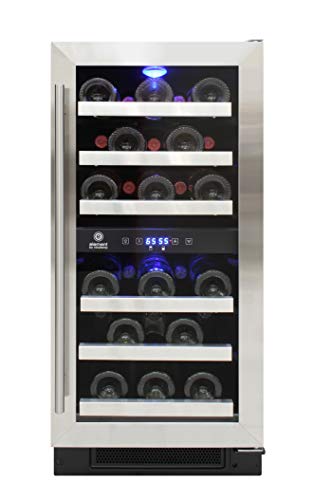
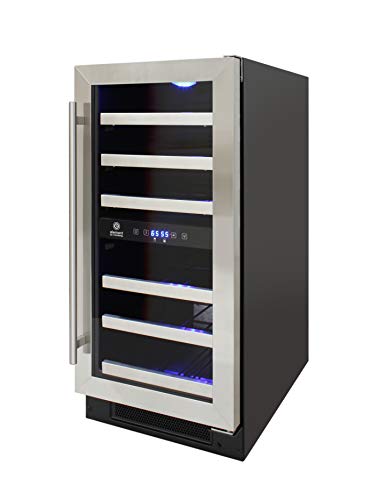
The Vinotemp 28-Bottle Dual-Zone Wine Cooler is a premium storage solution designed for wine enthusiasts who want precise temperature control and elegant design in one unit. This stainless steel Vinotemp wine cooler offers dual-zone functionality, allowing you to store reds and whites at their ideal temperatures simultaneously. Its touch-screen control panel with blue LED lighting adds modern convenience, while the black wire racking with stainless accents ensures both durability and style. Whether used as a built-in or freestanding unit, this cooler brings professional-grade wine storage to any home.
The Vinotemp 28-Bottle Dual-Zone Wine Cooler stands out as a reliable and stylish choice for serious wine collectors. As one of the most versatile Vinotemp wine cooler options, it offers precise temperature management through two independently controlled zones—ideal for storing both red and white wines at optimal conditions. Its stainless steel door, honeycomb grill ventilation, and black cabinet blend seamlessly into modern kitchens, bars, or entertainment spaces.
- Dual-Zone Cooling: Allows perfect temperature settings for both red and white wines.
- Premium Build: Stainless steel door, modern racking, and clean LED display for a sleek look.
- Flexible Installation: Works as both a built-in and freestanding Vinotemp wine cooler.
- Higher Price Point: More expensive compared to smaller single-zone models.
- Limited Capacity: 28 bottles may be small for growing collections.
- Low Stock Availability: Frequently limited supply due to demand.
Vinotemp IL-OW002 2-Bottle Wine Chiller Refrigerator


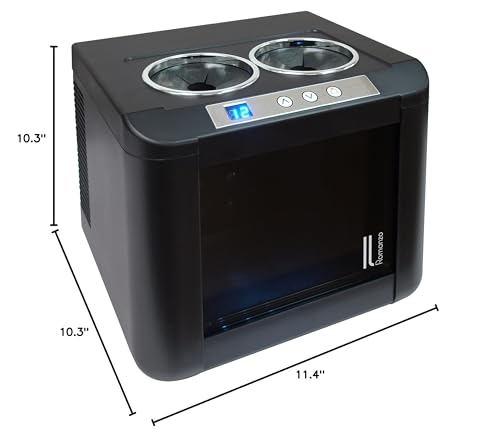
The Vinotemp IL-OW002 2-Bottle Wine Chiller Refrigerator is a compact and innovative Vinotemp wine cooler designed for countertops and small spaces. Its unique open-top, freestanding design allows you to chill and store two bottles upright—perfect for entertaining or keeping opened bottles at the ideal temperature. With adjustable digital temperature control ranging from 41°–66°F, this cooler offers precise cooling for red, white, or sparkling wines. Featuring a quiet thermoelectric cooling system, sleek black finish, and a clear viewing window, it delivers functionality and modern style in a compact footprint.
The Vinotemp IL-OW002 Wine Chiller Refrigerator is an excellent choice for those seeking a compact and convenient Vinotemp wine cooler for everyday use. Designed with a unique open-top, freestanding layout, it accommodates two wine bottles upright, making it perfect for chilling open bottles during gatherings or maintaining serving temperature throughout the evening. Its small dimensions make it ideal for countertops, condos, office spaces, and home bars.
- Compact Countertop Size: Ideal for small kitchens, bars, and tight spaces.
- Adjustable Temperature Control: Digital settings from 41°–66°F for accurate chilling.
- Quiet Thermoelectric Cooling: Minimal noise and vibration to preserve wine quality.
- Very Limited Capacity: Holds only two bottles, not ideal for collectors.
- Open-Top Exposure: May not suit environments with fluctuating temperatures.
- Mixed User Reviews: Lower overall rating compared to larger Vinotemp wine coolers.
Vinotemp EL-300COMM Cellar Cooler Refrigerator
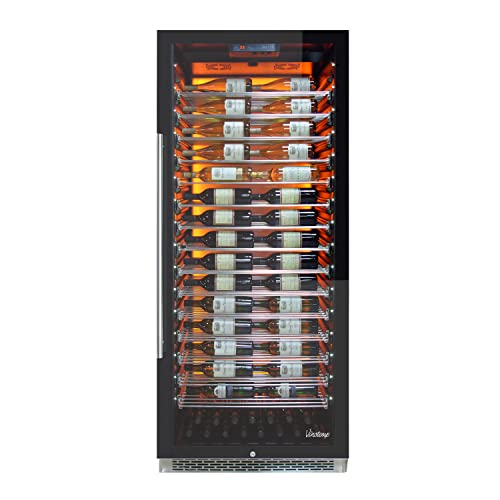


The Vinotemp EL-300COMM Cellar Cooler Refrigerator is a high-capacity Vinotemp wine cooler designed for collectors who demand premium storage and advanced temperature control. With space for up to 188 bottles, this full-sized built-in or freestanding unit features patented VinBo Racks that cradle bottles label-forward for easy viewing. Its touchscreen temperature control allows precise adjustments between 41°–64°F, while the dual-paned glass door, soft LED lighting, and tri-color backlit panels showcase your collection beautifully. Engineered with a vibration-damping design, adjustable shelves, and front-exhaust installation, this Vinotemp wine cooler combines functionality, style, and professional-grade performance for serious wine enthusiasts.
For serious collectors seeking a top-tier Vinotemp wine cooler, the Vinotemp EL-300COMM Cellar Cooler Refrigerator delivers exceptional capacity and advanced storage technology. This premium unit accommodates up to 188 bottles, making it one of the best options for building a professional-grade wine collection at home. Designed for built-in or freestanding use, it features front-exhaust ventilation and a sleek, tinted glass door that blends seamlessly with modern interiors.
- Massive 188-Bottle Capacity: Ideal for collectors with large or growing wine cellars.
- Premium Display & Racking: Patented VinBo Racks and multi-color backlighting enhance presentation.
- Built-In or Freestanding: Flexible installation with front exhaust for seamless integration.
- High Price Tag: Premium features come with a significant investment.
- Single-Zone Cooling: Not ideal for storing different wine types at different temperatures.
- Low User Rating: Limited reviews with below-average rating may concern some buyers.
Vinotemp 215-Bottle Wine Cooler Refrigerator


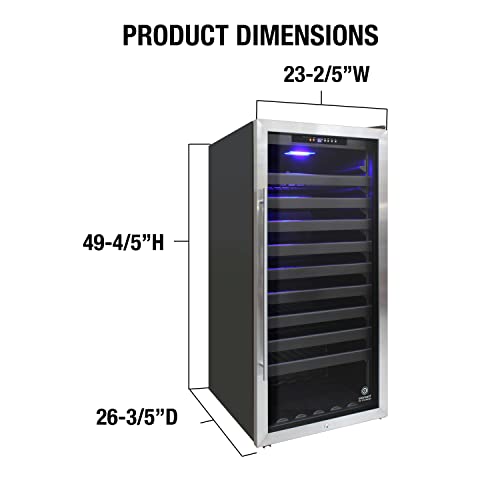
The Vinotemp Single Zone 114-Bottle Wine Cooler is a spacious and elegantly designed Vinotemp wine cooler crafted for collectors who want reliable temperature control in a freestanding unit. With a generous 114-bottle capacity, this cooler features nine full-size sliding racks, a hinged dual-pane glass door, and soft interior LED lighting that highlights your collection. Its digital temperature control panel allows precise adjustments between 41°–68°F, while the security lock ensures safe storage. Built for easy freestanding installation, this Vinotemp wine cooler blends performance, style, and convenience for any home or office.
The Vinotemp Single Zone 114-Bottle Wine Cooler is an excellent choice for collectors seeking a spacious, reliable, and stylish Vinotemp wine cooler for home or office use. Designed for freestanding placement, it features a sleek black finish and a stainless steel-accented dual-paned glass door that provides both insulation and an elegant display of your wine collection.
- Large 114-Bottle Capacity: Ideal for mid-to-large-size wine collections.
- Convenient Sliding Racks: Full-size shelves allow easy access to every bottle.
- Freestanding Setup: No installation required—simple and hassle-free placement.
- Single-Zone Cooling: Not suitable for storing reds and whites at different temperatures.
- Takes Up Floor Space: Requires adequate room due to its full-height freestanding design.
- Temperature Range May Be Broad: Some collectors may prefer tighter precision for long-term aging.
Understanding Wine Cooler Temperature Zones
Temperature control forms the foundation of proper wine storage. All wines should be stored at similar temperatures for long-term aging, typically between 53-57°F, regardless of varietal. However, serving temperatures differ significantly between wine types, which is where zone configuration becomes relevant.
Single-zone coolers maintain one consistent temperature throughout the entire unit. These work well for collectors focusing on one wine type or those primarily interested in long-term storage. The uniform temperature typically ranges between 45-65°F depending on user preference.
Dual-zone coolers divide the interior into two independently controlled compartments. This configuration allows one section to maintain storage temperature while the other keeps wines at serving temperature. White wines generally serve best between 45-52°F, while reds prefer 58-65°F. The lighter the wine, the cooler it should be served; fuller-bodied wines benefit from slightly warmer temperatures.
For collectors with diverse holdings, dual-zone units provide the flexibility to keep whites chilled in the lower zone while reds rest in the upper, warmer zone. Some advanced models even allow both zones to be set to identical temperatures, effectively converting the unit into a single-zone cooler when needed.
Compressor vs. Thermoelectric Cooling
Vinotemp manufactures wine coolers using two distinct cooling technologies, each with specific advantages.
Compressor-based units function similarly to traditional refrigerators, using refrigerant and a mechanical compressor to remove heat. These systems generate more powerful cooling, making them effective in ambient temperatures above 80°F. Compressor coolers can achieve lower temperatures than thermoelectric models and maintain stability even when external conditions fluctuate. They typically last longer than thermoelectric alternatives but produce more operational noise and slight vibration.
Thermoelectric coolers use the Peltier effect, passing electrical current through joined metal plates to transfer heat. These units operate almost silently without moving compressor parts, resulting in minimal vibration that could disturb wine sediment. However, thermoelectric technology proves less effective in warm environments and cannot achieve temperatures as low as compressor systems. Energy efficiency tends to be higher, but cooling capacity remains limited compared to compressor models.
Climate plays a significant role in determining which technology suits a particular installation. Homes in consistently cool climates may find thermoelectric units adequate and appreciate their quiet operation. Warmer regions or spaces without climate control benefit from the more robust cooling capacity of compressor-based models.
Essential Features to Consider
Beyond cooling technology and zone configuration, several features impact wine storage quality and user experience.
UV-protected glass doors shield bottles from harmful light exposure that can prematurely age wine and damage labels. Tinted glass provides an additional layer of protection while allowing visibility of the collection.
Adjustable shelving accommodates various bottle sizes and shapes. Standard Bordeaux and Burgundy bottles fit differently, and collectors with champagne bottles or unusual formats need flexible racking configurations. Slide-out shelves improve accessibility, particularly in deeper units.
Digital temperature displays and touchscreen controls allow precise temperature adjustment without opening the door, preventing unnecessary temperature fluctuations. LED readouts provide at-a-glance monitoring of internal conditions.
Interior LED lighting illuminates the collection for display purposes while generating minimal heat compared to incandescent bulbs. Many units allow lights to be toggled on and off as needed.
Security locks prevent unauthorized access and keep temperature controls from being accidentally adjusted. This feature proves valuable in commercial settings or homes with children.
Vibration dampening protects wine from movement that can disturb sediment and accelerate chemical reactions affecting flavor. Compressor units benefit most from vibration-reduction technology.
Humidity control helps maintain cork integrity. Without adequate humidity, corks dry out and allow oxygen to seep into bottles, leading to oxidation. The ideal humidity range falls between 50-80%.
Installation Considerations
Vinotemp produces wine coolers for various installation scenarios, each with specific requirements.
Freestanding units require no installation beyond placing them on a level surface and plugging them in. These models need adequate clearance on all sides for proper ventilation and heat dissipation. Freestanding designs offer maximum flexibility for relocation.
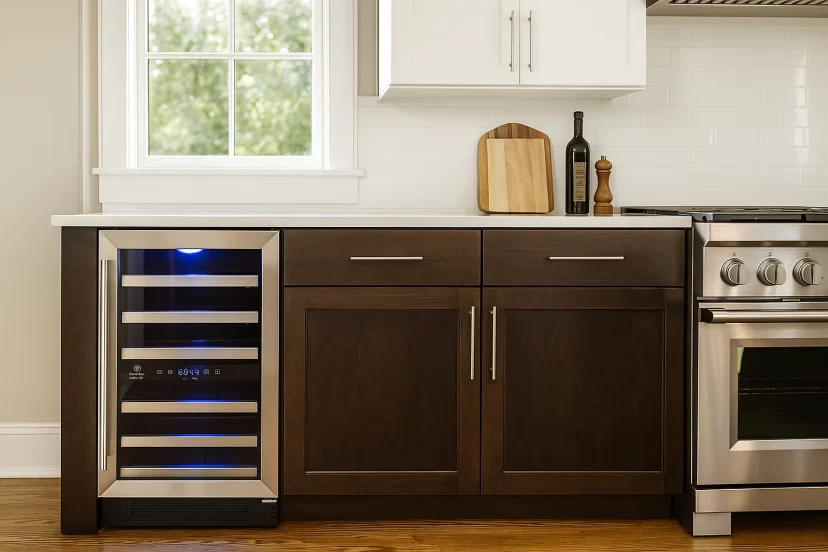
Built-in models feature front-venting systems that expel heat through the front of the unit rather than the back or sides. This design allows the cooler to be installed flush with cabinetry or integrated into existing kitchen layouts. Proper clearance specifications must be followed to ensure adequate airflow.
Undercounter installations fit beneath countertops, typically in 15-inch or 24-inch widths standard to kitchen cabinetry. Front-venting remains essential for these configurations.
Location selection impacts performance regardless of installation type. Units should never be placed in direct sunlight or near heat sources like ovens or heating vents. The surface must support the full weight of the cooler when loaded with bottles. Frequently used rooms may not suit wine storage due to vibration concerns.
Electrical requirements typically call for standard 115V outlets. Extension cords should be avoided when possible, but if necessary, they must be UL-listed 3-wire grounding type cords rated for 115V, 15A, and no longer than 15 feet.
Maintenance and Care
Regular maintenance extends the lifespan of wine coolers and ensures consistent performance.
The exterior cabinet should be cleaned with mild, non-abrasive cleaners. Harsh chemicals can damage finishes. All surfaces must be dried thoroughly before reconnecting power.
Interior cleaning requires unplugging the unit first. Wire racks and shelves can be removed and washed separately. Spills should be addressed promptly to prevent odors from developing.
Condenser coils require periodic cleaning to maintain cooling efficiency. Dust and debris accumulation forces the compressor to work harder, increasing energy consumption and potentially shortening component life.
Temperature monitoring should occur regularly to catch fluctuations early. Significant deviations from set points may indicate developing problems with cooling systems.
Door seals need inspection for wear or damage. Compromised gaskets allow warm air infiltration, forcing cooling systems to run constantly and potentially failing to maintain proper temperatures.
Overfilling should be avoided. When wine coolers exceed their rated capacity, air circulation becomes restricted and temperature consistency suffers.
Customer Experience and Reliability
Customer feedback on Vinotemp products reflects a range of experiences. Some users report units performing reliably for a decade or more, maintaining consistent temperatures and requiring minimal intervention. These positive experiences often mention adequate storage capacity, quiet operation, and effective temperature control.
Other customers have encountered challenges including cooling system failures, condensation issues, and component malfunctions occurring within the warranty period or shortly thereafter. Several reviews note difficulties obtaining service support, with some reporting that listed service providers either had poor reputations or did not actually service Vinotemp products.
Build quality observations vary by model and price point. Higher-end units generally receive more favorable feedback regarding construction quality, while entry-level models face more criticism for thin finishes, flimsy components, or noisy operation.
The mixed nature of customer experiences suggests that individual unit quality and proper installation play significant roles in long-term satisfaction. Warranty coverage and return policies should be carefully reviewed before purchase.
Making the Right Choice
Selecting an appropriate wine cooler involves assessing several factors specific to individual needs and circumstances.
Collection size determines minimum capacity requirements. However, purchasing a cooler sized for future growth prevents the need for replacement as collections expand. Most experts recommend avoiding filling units to maximum capacity, as overcrowding impairs air circulation and temperature stability.
Wine preferences influence zone requirements. Collectors focusing primarily on one wine type may find single-zone units sufficient and more economical. Those regularly serving multiple wine varieties benefit from dual-zone flexibility.
Available space and installation constraints narrow product options. Measuring the intended location carefully, including height, width, depth, and clearance requirements, prevents purchasing incompatible units.
Ambient temperature in the installation location affects cooling technology choice. Warm environments or spaces without climate control require compressor-based cooling for reliable performance.
Budget considerations balance initial cost against expected lifespan and operating expenses. Less expensive models may require earlier replacement, while premium units typically offer more robust construction and longer warranties.
Noise tolerance varies by individual and location. Wine coolers installed in living areas, bedrooms, or open-concept spaces benefit from quieter thermoelectric cooling or well-insulated compressor models.
Conclusion
Vinotemp wine coolers address the fundamental requirements of wine storage through various configurations, capacities, and cooling technologies. The brand offers solutions ranging from compact countertop models for casual enthusiasts to large-capacity units for serious collectors.
Key considerations when evaluating these products include capacity needs, temperature zone requirements, cooling technology appropriate for the installation environment, and available space constraints. Customer experiences vary significantly, with some users reporting years of reliable service while others encounter problems requiring repair or replacement.
Prospective buyers benefit from researching specific models, reading recent customer reviews, understanding warranty coverage, and confirming the availability of local service support. Proper installation following manufacturer guidelines and regular maintenance contribute significantly to long-term performance and reliability.
Wine storage represents an investment in preserving the quality and value of a collection. Selecting appropriate equipment based on careful assessment of individual needs and circumstances helps ensure wines age gracefully and remain ready to enjoy at their best.
Frequently Asked Questions
What temperature should a wine cooler be set at?
For long-term storage of any wine type, maintain temperatures between 53-57°F. If using a dual-zone cooler for both storage and serving, set one zone at 55°F for storage and the other between 45-52°F for whites or 58-65°F for reds depending on serving preferences. Single-zone units used for mixed collections work best at 55°F.
Can wine coolers be built into cabinetry?
Many Vinotemp models feature front-venting designs that allow built-in installation. These units expel heat through the front rather than the back or sides, permitting flush installation with surrounding cabinetry. Always verify that a specific model supports built-in installation and follow manufacturer clearance requirements for proper ventilation.
How long do wine coolers typically last?
Lifespan varies based on cooling technology, build quality, usage patterns, and maintenance. Compressor-based units generally last longer than thermoelectric models, with some units operating reliably for 10-15 years while others may require service or replacement within 3-5 years. Regular maintenance and avoiding overfilling help maximize longevity.
Do wine coolers consume a lot of electricity?
Energy consumption depends on size, cooling technology, ambient temperature, and usage patterns. Thermoelectric units typically use less energy than compressor models but provide less cooling power. Most wine coolers consume less electricity than full-size refrigerators. Units installed in cooler environments and opened infrequently operate most efficiently.
What’s the difference between a wine cooler and a regular refrigerator?
Wine coolers maintain higher temperatures than standard refrigerators, typically 45-65°F compared to 35-38°F. They control humidity to prevent cork drying, minimize vibration to protect sediment, and shield contents from UV light exposure. Regular refrigerators cool too much for proper wine storage, remove humidity, and vibrate frequently due to compressor cycling and door opening.