Best Wine Aerator for Red Wine
Post Disclaimer
*We may earn a commission for purchases made using our links. Please see our disclosure to learn more.
A good bottle of red wine deserves more than a quick pour. Some red wines, particularly young and full-bodied varieties, can taste overly tannic or seem muted immediately after opening. Allowing the wine to breathe may help reveal its aromas, soften the perception of harsh tannins, and create a more balanced drinking experience.
A wine aerator makes that process more convenient. Instead of waiting for wine to open up in a decanter, an aerator increases its exposure to air as it flows into your glass. This makes it a practical accessory for casual wine nights, dinner parties, and anyone who enjoys exploring different red wines.
But not every aerator works the same way. Some attach directly to the bottle, others are held over a glass, and electric models dispense wine with the push of a button.
This guide covers four of the best wine aerators for red wine, their advantages and limitations, and how to choose the right one for your drinking habits.
“Aerators expose wine to air, helping the wine to ‘breathe’ and release compounds that contribute flavor and aroma.”
— Shae Frichette, owner of Frichette Winery, quoted in NBC Select.
Key Takeaways
- Best overall: Vinturi Red Wine Aerator offers a dedicated handheld design for aerating individual glasses or an entire bottle.
- Best for everyday use: Vintorio Wine Aerator Pourer attaches directly to the bottle for convenient serving.
- Best simple pourer: Rabbit Wine Aerator Pourer Spout combines aeration with a streamlined pouring design.
- Best electric option: Aervana Original Electric Wine Aerator dispenses aerated wine with one-touch operation.
- Young, tannic reds such as Cabernet Sauvignon, Syrah, and Malbec are generally better candidates for aeration than delicate, mature wines.
What Does a Wine Aerator Do?
A wine aerator is a device designed to increase the amount of air that comes into contact with wine during pouring.
When wine passes through an aerator, its flow is redirected, spread out, or mixed with air. This greater exposure can change how the wine’s aromas and flavors are perceived.
Aeration may provide several benefits:
- More noticeable aromas: Fruit, spice, oak, and other aromatic characteristics may become easier to recognize.
- Smoother perceived texture: Young wines with pronounced tannins may seem less aggressive.
- Better flavor expression: Wines that initially seem closed or muted may become more expressive.
- Convenient serving: A glass can be aerated during pouring without preparing a separate decanter.
However, aeration does not automatically improve every bottle. It cannot correct fundamental wine faults, replace years of bottle aging, or turn an inexpensive wine into a premium vintage.
The goal is to help a suitable wine express qualities it already possesses.
Best Wine Aerators for Red Wine at a Glance
| Wine Aerator | Type | Best For |
|---|---|---|
| Vinturi Red Wine Aerator | Handheld | Best overall |
| Vintorio Wine Aerator Pourer | Bottle-mounted | Everyday pouring |
| Rabbit Wine Aerator Pourer Spout | Bottle-mounted | Simple, budget-friendly use |
| Vinaera PRO Adjustable Electric Wine Aerator | Electric dispenser | Best Adjustable Electric Option |
Each product approaches aeration differently. The best choice depends on how frequently wine is served, whether individual glasses or whole bottles are poured, and how much maintenance is acceptable.
The 4 Best Wine Aerators for Red Wine
1. Vinturi Red Wine Aerator — Best Overall

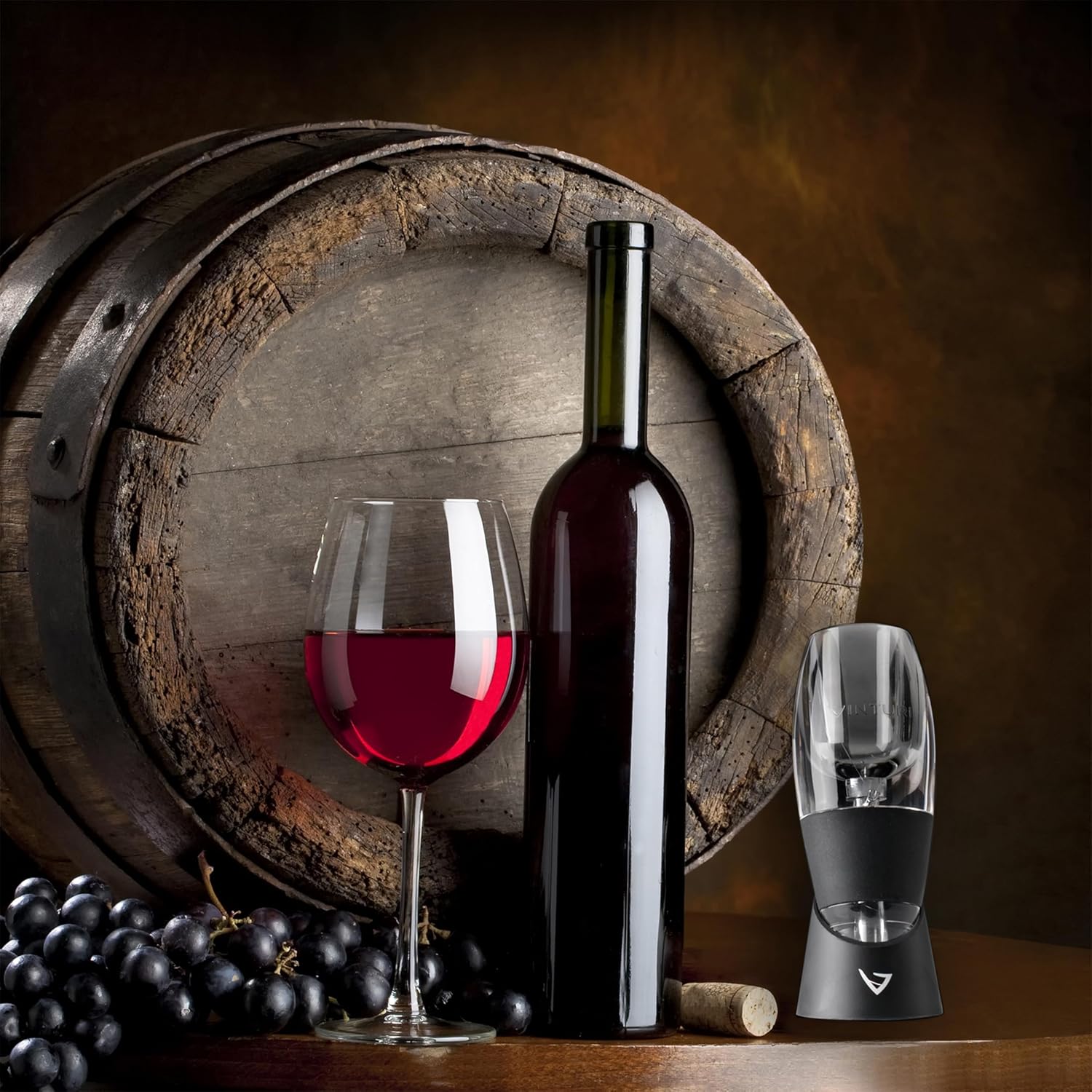
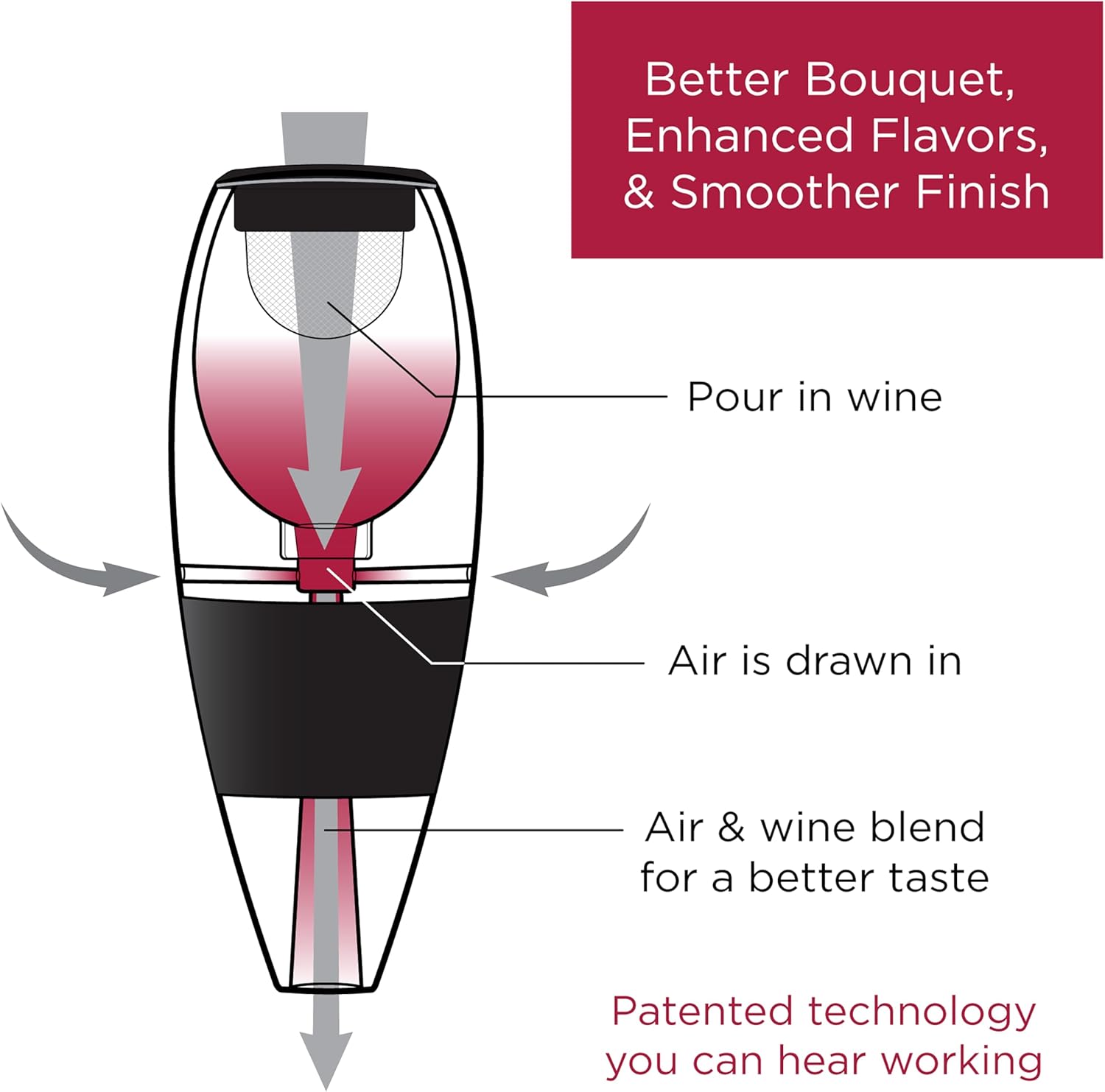
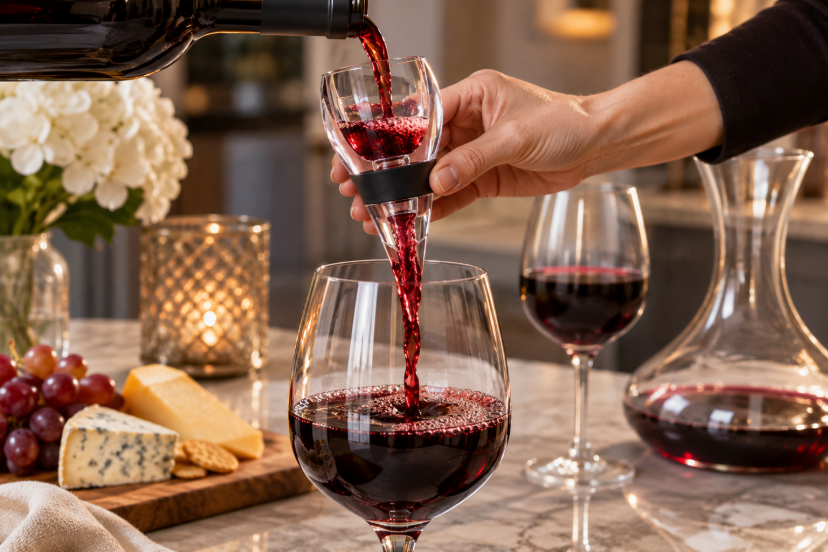
The Vinturi Wine Aerator Pourer is designed to aerate red wine instantly as you pour, helping enhance its aroma, flavor, and overall smoothness without the long wait of traditional decanting. Its patented internal design increases the wine’s velocity while lowering pressure, drawing in the right amount of air to open up the wine in seconds.
- Fast Aeration: Opens up red wine in seconds instead of requiring extended decanting time.
- Built-In Filter: Helps catch cork pieces and sediment while pouring.
- Easy to Use: Simple handheld design works well for individual glasses or an entire bottle.
- Requires Two-Handed Pouring: You need to hold the aerator over the glass while pouring from the bottle.
- Best for Red Wine: The design is specifically optimized for red wines rather than all wine styles.
- Needs Cleaning After Use: The internal aeration chamber and screen should be rinsed thoroughly after pouring.
The Vinturi Red Wine Aerator is a strong all-around choice for wine drinkers who want a dedicated aeration device without complicated operation.
Unlike bottle-mounted models, the Vinturi is held above a wine glass or decanter. Wine passes through its internal chamber, where differences in flow velocity and pressure draw air into the liquid.
Its design is specifically intended for red wines, making it particularly relevant for people who regularly enjoy Cabernet Sauvignon, Malbec, Shiraz, or other structured varieties.
The model includes a no-drip stand and a filter screen. Its acrylic body and silicone grip are designed to make pouring more comfortable.
What makes it stand out
The Vinturi offers flexibility. It can aerate a single glass when drinking alone or be used while transferring wine into a decanter for a larger gathering.
Because it does not need to remain attached to the bottle, switching between wines is straightforward after cleaning.
Advantages
- Designed specifically for red wine
- Suitable for individual glasses or full bottles
- Includes a stand to catch residual drips
- Filter screen helps catch some particles
- Requires no batteries
Considerations
The handheld design requires more coordination than a bottle-mounted pourer. Holding the aerator while pouring can also be less convenient when serving several guests.
Best for: Red wine enthusiasts who want a versatile, reusable aerator and do not mind using two hands.
2. Vintorio Wine Aerator Pourer — Best for Everyday Use


The Vintorio Wine Aerator Pourer is a compact wine accessory designed to improve the flavor and aroma of red wine as it is poured. Its large aeration chamber uses the Bernoulli effect to introduce air into the wine, potentially making young, tannic reds taste smoother. The tapered rubber stopper provides a secure fit, while the angled acrylic spout helps prevent drips. Its detachable design also makes cleaning simple.
- Instant Aeration: Exposes wine to air while pouring.
- Drip-Free Design: Angled spout helps prevent spills.
- Easy Cleaning: Detachable parts rinse under water.
- Bottle Fit: May not seal perfectly on every bottle.
- Limited Control: No adjustable aeration settings.
- Wine Sensitivity: Not ideal for every red wine.
The Vintorio Wine Aerator Pourer is designed for people who prefer to aerate wine directly from the bottle.
Its bottle-mounted design combines an aeration chamber, a rubber sealing component, and an angled pouring spout.
As wine travels through the chamber, air is introduced into the flow. The manufacturer uses a design based on the Bernoulli effect to increase air interaction during pouring.
One of its most useful features is convenience. Once fitted into a compatible bottle, it can remain in place while several glasses are served.
What makes it stand out
Vintorio focuses on combining aeration with more controlled pouring.
The notched spout is designed to help reduce drips, while the tapered rubber stopper creates a seal around the bottle opening. Its components can also be separated for cleaning.
The compact construction makes it convenient to store in a kitchen drawer or bar accessory organizer.
Advantages
- Attaches directly to the bottle
- Suitable for one-handed pouring
- Angled spout helps control drips
- Compact and easy to store
- Can be disassembled for cleaning
Considerations
The seal must fit correctly to prevent leaks. Like many small aerators, it also requires careful rinsing to prevent wine residue from accumulating inside the chamber.
Best for: Regular wine drinkers who prioritize convenient, controlled pouring and minimal setup.
3. Rabbit Wine Aerator Pourer Spout — Best Simple Pourer


The Rabbit Wine Aerator Pourer Spout is an affordable and easy-to-use accessory designed to enhance the aroma and flavor of red wine while pouring. Its built-in aeration system exposes wine to air, helping bring out its natural characteristics without waiting for traditional decanting. The slim silicone base fits securely into standard wine bottles, while the drip-resistant spout helps prevent spills. With its polished stainless steel accent and compact design, it is a practical addition to any home bar.
- Instant Aeration: Enhances wine aromas while pouring.
- Drip-Free Pouring: Silicone base helps prevent messy spills.
- Easy Maintenance: Simple to hand wash and air dry.
- Manual Cleaning: Not designed for dishwasher use.
- Limited Features: No adjustable aeration settings.
- Bottle Compatibility: Fit may vary with unusual bottle openings.
The Rabbit Wine Aerator Pourer Spout offers a straightforward approach to aerating wine.
It inserts into a wine bottle and functions much like a traditional pouring spout while increasing air contact as wine flows through it.
This design is appealing to anyone who wants the convenience of aeration without handling a separate accessory over each glass.
Its relatively compact form also makes it suitable for a small home bar, picnic basket, or wine accessory collection.
What makes it stand out
Simplicity is the main advantage.
There are no batteries, electronic settings, or separate dispensing mechanisms. The aerator is fitted into the bottle, and wine is poured in the usual way.
Rabbit’s aerating pourer design also emphasizes drip control and removable components for cleaning.
Advantages
- Straightforward bottle-mounted operation
- No electrical components
- Compact for storage
- Suitable for casual entertaining
- Designed to offer controlled pouring
Considerations
Bottle opening sizes and the fit of the stopper can affect pouring performance. Users seeking a more elaborate aeration chamber or adjustable control may prefer a different design.
Best for: Beginners or occasional wine drinkers who want a simple, practical accessory without additional features.
4. Vinaera PRO Adjustable Electric Wine Aerator — Best Adjustable Electric Option


The Vinaera PRO Adjustable Electric Wine Aerator is a premium wine accessory designed to provide customizable aeration for different types of wine. Unlike standard electric aerators, it features adjustable aeration levels, allowing users to control how much air is introduced during pouring. Its one-touch dispensing system, drip-resistant spout, and built-in sediment filter make serving convenient and mess-free. The telescopic tube accommodates different bottle heights, while the gun-metal finish adds a sophisticated touch to any home bar.
- Adjustable Aeration: Customizable settings for different wine varieties.
- One-Touch Operation: Dispenses aerated wine with minimal effort.
- Sediment Filter: Helps keep unwanted particles out of the glass.
- Higher Price: More expensive than basic wine aerators.
- Battery Requirement: Requires six AAA batteries, sold separately.
- More Maintenance: Electric components require careful cleaning.
The Vinaera PRO Adjustable Electric Wine Aerator combines customizable aeration with convenient, one-touch wine dispensing. Unlike standard electric aerators with fixed aeration levels, this model allows users to adjust the amount of air introduced into the wine, making it suitable for different red wine varieties.
Rather than tilting the bottle, the device attaches directly to an open wine bottle and dispenses wine into a glass with the press of a button. Its adjustable aeration dial allows users to control the aeration intensity based on the wine’s characteristics and personal preferences.
The manufacturer claims its adjustable settings can simulate up to three hours of traditional decanting, although actual results depend on the wine. Its telescopic tube accommodates bottles of different heights, while the built-in sediment filter helps prevent unwanted particles from entering the glass.
What makes it stand out
The biggest advantage of the Vinaera PRO is its adjustable aeration system. Unlike electric models that apply the same level of aeration to every wine, it allows users to customize the process.
This flexibility is particularly useful for wine enthusiasts who regularly switch between lighter reds, such as Pinot Noir, and fuller-bodied varieties, such as Cabernet Sauvignon or Malbec.
The one-touch dispensing system also makes serving convenient during dinner parties and gatherings. Its drip-resistant spout helps minimize spills, while the gun-metal finish and included countertop stand provide a modern presentation for a home bar.
The Vinaera PRO operates on six AAA batteries, which are sold separately. According to the manufacturer, one set of batteries can aerate more than 100 bottles of wine.
Advantages
- Adjustable aeration levels for different wine styles
- One-touch electric dispensing
- Built-in sediment filter
- Drip-resistant spout for cleaner pouring
- Telescopic tube accommodates different bottle heights
- Includes a countertop storage stand
Considerations
The Vinaera PRO costs more than basic manual aerators and requires six AAA batteries. Its electric components also need careful cleaning and maintenance. Although adjustable aeration offers greater control, not every wine benefits from increased oxygen exposure.
Best for: Wine enthusiasts and frequent hosts who want customizable aeration, convenient electric dispensing, and greater control over how different red wines are served.
How These Wine Aerators Were Selected
The four recommendations represent different practical needs rather than a claim that one model is perfect for everyone.
Selection considerations include design, serving convenience, compatibility, cleaning requirements, and useful features documented by manufacturers and independent product coverage.
The list includes handheld, bottle-mounted, and electric options to provide meaningful choices at different levels of complexity.
These are research-based recommendations, not the results of a controlled, hands-on tasting comparison. Actual flavor changes will vary depending on the wine and individual preferences.
How to Choose the Best Wine Aerator for Red Wine
An expensive aerator is not necessarily the best option. The right design should suit how wine is actually served.
Choose the Right Aerator Type
Handheld aerators work well for individual servings and for pouring into a decanter. However, they usually require two hands.
Bottle-mounted aerators are convenient for regular use because they stay attached to the bottle while pouring.
Electric aerators automate dispensing, making them attractive for frequent entertaining, although they require additional maintenance.
Check Pouring Control
An aerator should make serving wine easier, not messier.
Look for a secure bottle seal, a well-designed spout, and an appropriate flow rate. Drip-catching stands are useful for handheld models.
A device that pours too quickly or fits poorly may cause splashing, especially when glasses are narrow.
Consider Cleaning Requirements
Red wine can leave residue inside small chambers and narrow passages.
Models that separate into a few accessible components are generally easier to maintain than devices with enclosed tubing.
For electric models, check the manufacturer’s cleaning instructions before purchasing.
Match the Aerator to Your Wine Preferences
People who mostly drink young, full-bodied reds are more likely to appreciate frequent aeration.
Those who prefer delicate Pinot Noir, mature Burgundy, or older collectible bottles may use an aerator less often.
In these cases, a good wine glass or a decanter may be more useful than a powerful aerating device.
Which Red Wines Benefit Most From Aeration?
The grape variety provides a starting point, but the wine’s age, structure, and winemaking style also matter.
| Red Wine | General Aeration Approach |
|---|---|
| Cabernet Sauvignon | Often benefits when young and tannic |
| Syrah or Shiraz | Often benefits when bold and structured |
| Malbec | Worth trying with concentrated young styles |
| Merlot | May benefit when firm or tightly structured |
| Zinfandel | Can benefit, depending on body and style |
| Pinot Noir | Usually start with gentle swirling |
| Mature Bordeaux | Aerate cautiously, if at all |
A young Cabernet Sauvignon with prominent tannins may become more approachable after exposure to air.
A delicate Pinot Noir, however, might already have expressive aromas that do not require aggressive aeration.
Similarly, a mature red wine may have developed complex aromas through years of aging. Excessive oxygen can cause some of those characteristics to fade.
The best approach is to taste the wine before aerating it. If its flavors already seem balanced and expressive, additional aeration may be unnecessary.
How to Use a Wine Aerator Correctly
Getting the most from a wine aerator requires more than attaching it and pouring.
Step 1 — Open and Taste the Wine
Pour a small amount directly into a clean glass before using the aerator.
Notice the wine’s aroma, fruit expression, acidity, and tannic texture.
This provides a baseline for determining whether aeration actually improves the wine.
Step 2 — Position the Aerator Securely
For a handheld model, hold the device above a stable glass or decanter.
For a bottle-mounted model, insert the stopper carefully and check that it fits securely.
For an electric model, follow the manufacturer’s installation instructions and ensure the dispensing tube is properly positioned.
Step 3 — Pour at a Controlled Rate
Pour the wine steadily through the device.
Avoid overfilling the aeration chamber or tipping the bottle too aggressively, as either may lead to spills.
Step 4 — Compare the Results
Taste the aerated wine beside the original sample.
Look for differences in aroma intensity, perceived astringency, flavor balance, and finish.
An aerator is useful when the result is more enjoyable, not merely because the wine tastes different.
Step 5 — Clean After Use
Rinse the aerator according to its manufacturer’s instructions soon after serving.
Allow removable components to dry completely before storing them.
For electric units, use the recommended flushing procedure rather than immersing the motorized housing.
Wine Aerator vs. Decanter — Which Is Better?
A wine aerator and a decanter both expose wine to air, but they serve somewhat different purposes.
An aerator provides immediate air contact during pouring. It is especially convenient when only one or two glasses are being served.
A decanter transfers wine into a separate vessel, where exposure to air can continue over time. It is particularly useful when a young, structured wine needs gradual development.
Decanters also have another important function: separating wine from sediment.
Older red wines and some unfiltered wines may contain sediment that should remain in the bottle during careful pouring.
An aerator generally cannot replace the sediment-separation process, even when it includes a basic filter.
For everyday young reds, an aerator may be the more convenient choice. For sediment-heavy bottles or wines that benefit from gradual evolution, a decanter is often more appropriate.
Common Mistakes When Aerating Red Wine
Even a high-quality aerator can produce disappointing results when used unnecessarily or incorrectly.
- Aerating every bottle: Not all wines need additional oxygen. Taste first instead of assuming aeration is always beneficial.
- Using aggressive aeration on older wines: Mature reds can be delicate. Rapid exposure may reduce attractive aromas.
- Expecting instant aging: An aerator can alter aroma and flavor perception, but it cannot recreate the chemical development of years in a cellar.
- Ignoring serving temperature: A red wine served too warm may taste overly alcoholic, regardless of the aerator used.
- Neglecting cleaning: Wine residue in the aerator can affect hygiene, pouring performance, and the experience of future glasses.
The most useful wine accessories improve the serving experience without making it unnecessarily complicated.
Finding the Best Wine Aerator for Red Wine
The best wine aerator should enhance your wine-drinking experience by improving aroma, flavor, and serving convenience. Choosing the right model depends on your preferred red wines, how often you entertain, and the features you value most.
For overall performance and versatility, the Vinturi Red Wine Aerator is an excellent choice for aerating individual glasses or full bottles. The Vintorio Wine Aerator Pourer offers convenient everyday use with its bottle-mounted design, while the Rabbit Wine Aerator Pourer Spout provides a simple, budget-friendly option.
For wine enthusiasts seeking more control, the Vinaera PRO Adjustable Electric Wine Aerator stands out with its customizable aeration settings, one-touch dispensing, and built-in sediment filter. Its adjustable design makes it particularly appealing to those who enjoy different red wine varieties.
Ultimately, the best aerator is one that suits your drinking preferences and serving habits. Whether you choose a manual pourer or an advanced electric model, proper aeration can help suitable red wines reveal their aromas, flavors, and balance.
Taste your wine before aerating, experiment with different levels of air exposure, and enjoy the results that best suit your palate.
Frequently Asked Questions
1. Do Wine Aerators Actually Make Red Wine Taste Better?
Wine aerators can improve the drinking experience for certain red wines by increasing air contact during pouring. Young, tannic wines may become more expressive, with fruit aromas easier to recognize and a softer perceived texture.
However, results vary. Some wines show only subtle changes, while others may taste better without aeration. Comparing an aerated and unaerated sample is the simplest way to judge the difference.
2. Is a Wine Aerator Worth Buying for Occasional Wine Drinkers?
A basic manual aerator can be worthwhile for occasional wine drinkers who regularly enjoy young Cabernet Sauvignon, Malbec, or other full-bodied reds.
Bottle-mounted models are particularly convenient because they require little preparation and storage space.
However, anyone who drinks red wine infrequently may find that a larger wine glass and gentle swirling are sufficient.
3. Does a Wine Aerator Remove Sulfites or Reduce Alcohol?
A standard wine aerator is not a reliable method of removing sulfites or meaningfully reducing alcohol content.
Its primary purpose is to increase contact between wine and air, potentially changing the release and perception of aroma compounds.
Aeration should not be treated as a way to make wine alcohol-free or safe for someone who needs to avoid particular wine components.
4. Do You Need to Aerate Every Glass of Red Wine?
No. Aeration should depend on the wine and how it tastes.
For a young, tightly structured red, aerating each serving may be useful. If the wine is already open and balanced, additional aeration may not offer an advantage.
Wine also changes naturally after opening. A bottle that needed aeration initially may become more expressive with time, making further aeration unnecessary.
5. Are Electric Wine Aerators Better Than Manual Aerators?
Electric aerators are not automatically better at improving wine. Their main advantages are convenience, push-button dispensing, and presentation.
Manual aerators are generally simpler, more portable, and easier to maintain.
An electric option may be worthwhile for frequent entertaining, while a handheld or bottle-mounted model is often sufficient for everyday enjoyment.
The best choice depends more on serving habits than on technology alone.