What Is Kosher Wine? A Complete Guide
Post Disclaimer
*We may earn a commission for purchases made using our links. Please see our disclosure to learn more.
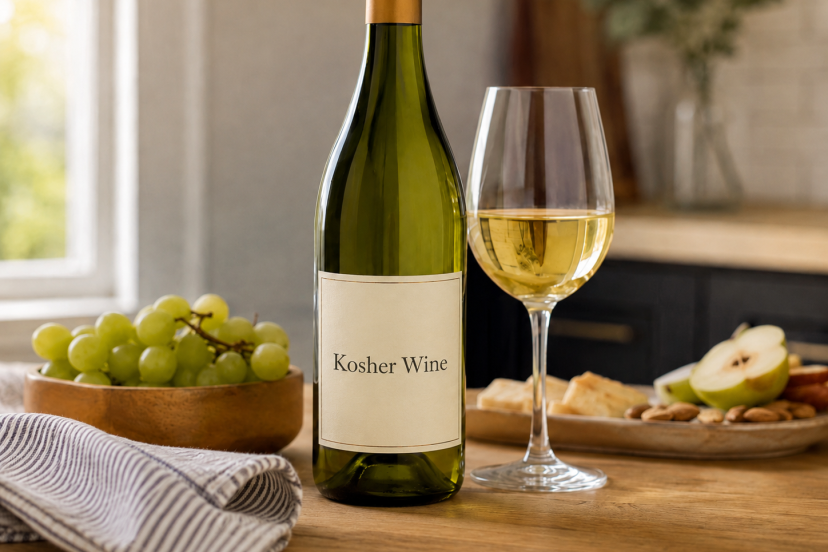
Kosher wine is wine produced according to Jewish dietary laws, known as kashrut, under recognized kosher supervision. Contrary to a common misconception, kosher wine is not a particular type of wine, grape variety, flavor, or level of sweetness. Cabernet Sauvignon, Chardonnay, Moscato, Pinot Noir, sparkling wine, rosé, and many other styles can all be kosher.
What distinguishes kosher wine is primarily how the wine is produced, handled, and certified. Ingredients and winemaking materials must meet kosher requirements, appropriate supervision must be present, and special rules apply to who may handle the wine during important stages of production.
Wine receives particular attention under Jewish law because of its long-standing religious significance. Wine is used during Kiddush on Shabbat and Jewish holidays and appears at weddings, circumcisions, Passover Seders, and other Jewish ceremonies. At the same time, wine historically played a role in non-Jewish religious rituals and libations. These circumstances led to additional rabbinic laws surrounding its production and handling.
Modern kosher wine, however, encompasses far more than the intensely sweet Concord grape wines many consumers once associated with the category. Today, kosher wineries and kosher-certified producers make everything from approachable everyday bottles to serious age-worthy reds and premium wines from major wine-producing regions.
“A wide variety of domestic and imported kosher wines under reliable supervision has been added to the sweet Concords traditionally associated with kosher wines.”
— Chabad.org
Key Takeaways
- Kosher wine is defined by production standards, not flavor. It can be dry, sweet, red, white, rosé, sparkling, inexpensive, or premium.
- Kosher certification covers the winemaking process. Ingredients, equipment, additives, processing aids, handling, and production procedures must comply with kosher requirements.
- Wine has stricter handling rules than many other kosher foods because of its historic religious and ceremonial role.
- Mevushal wine has undergone an approved heating process, allowing it to retain its kosher status even when subsequently handled or poured by people who would otherwise affect the wine’s kosher status under traditional Jewish law.
- Kosher and kosher for Passover are related but not identical terms. Consumers observing Passover should still look for appropriate Passover certification.
- Kosher wine does not automatically taste different from conventional wine. The same grape varieties and conventional winemaking techniques can be used within kosher requirements.
- Kosher wine is produced worldwide, including in Israel, the United States, France, Italy, Spain, and other established wine regions.
Kosher Wines to Consider
The modern kosher wine category offers choices for very different palates. These four widely distributed options provide a useful starting point.
1. Bartenura Moscato d’Asti


Bartenura Moscato d’Asti is a light, semi-sweet Italian Moscato with a crisp and refreshing character. It features fruity notes of pear, tangerine, nectar, and melon, creating a smooth and approachable finish. With just 5% alcohol by volume, this 750mL bottle is an easy-drinking choice for desserts, fresh fruit, celebrations, or relaxed sipping.
- Refreshing Flavor: Crisp, fruity profile with pear, tangerine, nectar, and melon notes.
- Lower Alcohol: Contains 5% ABV, making it lighter than many traditional wines.
- Versatile Pairing: Works well with desserts, fresh fruit, or as a chilled casual drink.
- Sweet Profile: May not appeal to drinkers who prefer dry wines.
- Light Body: Might feel too delicate for those who enjoy fuller-bodied varieties.
- Limited Pairings: Its sweetness may not complement rich or strongly savory dishes as well as dry wines.
Best for: Sweet wine drinkers and desserts
Bartenura Moscato d’Asti is one of the most recognizable kosher wines and an approachable option for consumers who enjoy lighter, fruit-forward bottles.
It is crisp and semi-sweet, with flavors commonly described as pear, tangerine, melon, and nectar. Its gentle effervescence and lower alcohol level make it particularly suitable for serving chilled with fruit, pastries, or lighter desserts. Current U.S. retail listings identify it specifically as kosher.
Try it with: Fresh berries, fruit tarts, cheesecake, or mildly spicy dishes.
2. Baron Herzog Cabernet Sauvignon

Baron Herzog Sauvignon Blanc is a kosher white wine from the United States with a fresh, approachable style. Made from Sauvignon Blanc grapes, this 750ml bottle is a versatile option for everyday drinking, light meals, and casual gatherings. Its crisp white-wine profile makes it a practical choice for those who prefer refreshing wines over sweeter or fuller-bodied varieties.
- Crisp Style: Offers the fresh, refreshing character commonly associated with Sauvignon Blanc.
- Kosher Certified: Suitable for consumers looking specifically for kosher wine options.
- Food Friendly: Pairs well with lighter dishes such as seafood, salads, poultry, and vegetables.
- Light Profile: May not satisfy drinkers who prefer rich or full-bodied wines.
- Dryer Taste: Less suitable for those who favor sweet or semi-sweet wines.
- Simple Style: May feel too straightforward for drinkers seeking a more complex wine.
Best for: Classic dry-red drinkers
For someone whose image of kosher wine is exclusively sweet Concord wine, Baron Herzog Cabernet Sauvignon demonstrates just how broad the category has become.
This California Cabernet offers a more traditional dry-red experience and works well alongside substantial savory dishes. U.S. listings currently show the 750 mL Cabernet at 13.5% alcohol by volume.
Try it with: Roast beef, brisket, grilled meat, lamb, or rich mushroom dishes.
3. Baron Herzog, Chardonnay Kosher


Baron Herzog Chardonnay is a kosher white wine produced in the United States with a smooth, approachable character. This 750mL bottle contains 13.5% alcohol by volume and offers a classic Chardonnay option for casual meals, gatherings, or everyday enjoyment. Its fuller white-wine style makes it a good alternative for drinkers who want more body than lighter varieties such as Sauvignon Blanc.
- Fuller Style: Offers a richer white-wine experience than many lighter varietals.
- Kosher Wine: Suitable for shoppers specifically looking for kosher-certified wine.
- Versatile Pairing: Complements poultry, seafood, creamy dishes, and mild cheeses.
- Higher Alcohol: At 13.5% ABV, it may feel stronger than lighter white wines.
- Fuller Body: May not suit drinkers who prefer very crisp or delicate whites.
- Dry Profile: Less appealing for those who prefer noticeably sweet wines.
Best for: A versatile, fuller-bodied white
Baron Herzog Chardonnay is a smooth kosher white wine for drinkers who prefer a richer style than lighter whites such as Sauvignon Blanc or Pinot Grigio.
Produced in the United States, this Chardonnay comes in a 750mL bottle with 13.5% alcohol by volume. Its approachable profile makes it suitable for everyday meals as well as special gatherings.
Serve it chilled alongside richer dishes that complement Chardonnay’s fuller character.
Try it with: Roasted chicken, grilled salmon, creamy pasta, mild cheeses, or roasted vegetables.
Availability of alcoholic beverages can vary by location and local shipping regulations.
What Makes a Wine Kosher?
At the simplest level, kosher wine must meet the dietary and production requirements of Jewish law and be made under reliable rabbinical supervision.
There is nothing inherently non-kosher about grapes themselves. In fact, most unprocessed plant foods are naturally compatible with kosher dietary laws, provided other requirements are met. Wine is treated differently because liquids derived from grapes have special status in Jewish law.
For a wine to receive recognized kosher certification, several factors must be controlled.
Kosher Ingredients
Everything entering the wine must be acceptable under the kosher certification being used.
Wine may seem simple, essentially fermented grape juice, but modern winemaking can involve yeasts, nutrients, clarifying agents, enzymes, preservatives, fining materials, and other processing aids.
The supervising kosher authority therefore evaluates not just the grapes but also the ingredients and production materials used throughout winemaking.
Even substances that may eventually be filtered out can matter from a kosher-certification perspective.
Kosher Equipment
Equipment that comes into contact with the wine must also comply with kosher requirements.
Tanks, hoses, pumps, barrels, bottling equipment, filters, and other surfaces may need inspection or kosher preparation when a winery produces both kosher and non-kosher products.
This is one reason kosher production is much more involved than simply placing a certification symbol on a finished bottle.
Supervised Handling
Traditional Jewish law places additional restrictions on the handling of wine.
Under Orthodox kosher-production standards, once grapes reach the stage at which the special laws governing wine apply, handling is generally performed by qualified Sabbath-observant Jewish personnel under kosher supervision.
That requirement continues through critical production stages such as crushing, fermentation, transferring, blending, filtration, and bottling according to the standards of the certifying authority.
The reason is historical and religious. Wine was once commonly used for idolatrous libations. Rabbinic law consequently established additional restrictions around wine produced or handled outside the required framework.
Is Kosher Wine Made Differently From Regular Wine?
From a purely winemaking perspective, not necessarily.
A kosher Cabernet Sauvignon may begin with Cabernet Sauvignon grapes grown in precisely the same vineyard conditions as grapes destined for a non-kosher wine.
Grapes are harvested, crushed, fermented, aged, blended, filtered, and bottled using familiar winemaking techniques.
The fundamental difference is kosher oversight and handling.
A kosher winery must ensure that ingredients, equipment, production procedures, and personnel involved during regulated stages meet the requirements of its certification.
That means kosher wine is better understood as a production classification rather than a wine style.
There is no “kosher grape.”
Likewise, a wine does not need to come from Israel to be kosher. A California Cabernet, French Bordeaux, Italian Moscato, Spanish red, or New Zealand Sauvignon Blanc can potentially receive kosher certification when produced according to the required standards.
What Is Mevushal Wine?
One of the terms consumers frequently encounter on kosher wine labels is mevushal.
Mevushal literally means “cooked.”
Historically, wine that had been cooked was no longer considered suitable for use as a sacramental libation. Jewish law consequently treats properly prepared mevushal wine differently from ordinary non-mevushal kosher wine regarding subsequent handling.
Once wine has qualified as mevushal under the applicable kosher standard, it may generally be poured or handled by people who otherwise could not handle an opened bottle of non-mevushal kosher wine without creating a kashrut issue.
This makes mevushal wine particularly useful in:
- Restaurants
- Hotels
- Catered weddings
- Banquet halls
- Large celebrations
- Events with mixed service staff
Is Mevushal Wine Actually Boiled?
The word literally refers to cooking, but modern production may use controlled heating techniques rather than prolonged boiling.
Flash pasteurization can expose wine to a high temperature for a very short period before quickly cooling it. This approach is intended to satisfy applicable mevushal requirements while minimizing effects on the wine.
There are different rabbinic opinions regarding exactly what temperatures and processes qualify, which is another reason consumers who follow particular kosher standards should rely on the certification displayed on the bottle rather than trying to determine its status themselves. OU Kosher also notes that some wines may use the designation mifustar, meaning pasteurized, because authorities differ regarding whether certain forms of pasteurization qualify as mevushal.
Mevushal vs. Non-Mevushal Kosher Wine
Both categories can be completely kosher.
The difference primarily concerns what happens after the wine is opened.
Non-mevushal wine remains subject to stricter handling requirements.
Mevushal wine has undergone the approved heating treatment, providing greater flexibility once the bottle is opened.
For an ordinary consumer enjoying wine at home, this distinction may not always matter. At a professionally catered kosher event, however, it can be extremely important.
Labels typically indicate whether a wine is mevushal. Chabad recommends checking the certification and label when this status matters.
Does Kosher Wine Have to Be Sweet?
No.
This is probably the most persistent misconception surrounding kosher wine.
For generations of American consumers, kosher wine became closely associated with sweet Concord grape wines served at Jewish holidays. Those wines remain culturally significant and continue to have a devoted audience, but they represent only one corner of the modern kosher wine market.
Kosher wines now include:
- Dry Cabernet Sauvignon
- Merlot
- Pinot Noir
- Syrah
- Malbec
- Chardonnay
- Sauvignon Blanc
- Pinot Grigio
- Riesling
- Moscato
- Rosé
- Champagne-style and sparkling wines
- Bordeaux blends
- Dessert wines
Some are inexpensive everyday wines, while others are premium bottles designed for cellaring.
The kosher designation itself tells you essentially nothing about sweetness. Check the grape variety, region, tasting description, and sweetness classification just as you would with any other wine.
Does Kosher Wine Taste Different?
Not inherently.
Kosher certification does not create a specific flavor.
The taste of a bottle depends far more on factors such as:
- Grape variety
- Vineyard location
- Climate
- Vintage
- Fermentation
- Oak aging
- Winemaking style
- Residual sugar
- Acidity
- Alcohol level
- Bottle age
A dry kosher Cabernet Sauvignon can taste much more like another dry Cabernet Sauvignon than like a sweet kosher Concord wine.
Mevushal processing historically raised concerns among wine enthusiasts because prolonged heat could negatively affect aromas and flavor. Modern flash-heating techniques, however, are designed to expose wine to heat briefly and cool it rapidly, reducing potential sensory effects.
Is All Kosher Wine Kosher for Passover?
Not automatically.
Kosher for Passover involves additional restrictions associated with the holiday, particularly the prohibition against chametz, foods derived from certain fermented grains.
Wine produced specifically for Passover must meet those additional standards throughout its production.
In practice, many kosher wines are also certified kosher for Passover, but consumers should not simply assume this based on a regular kosher symbol. OU Kosher notes that although most kosher wines are kosher for Passover, exceptions exist, making it important to check for the appropriate Passover designation.
If you are purchasing wine specifically for a Passover Seder, inspect the label for Passover certification.
How to Read a Kosher Wine Label
A few markings can tell you a great deal.
Kosher Certification
Look for a recognized kosher certification symbol, often called a hechsher.
Common kosher agencies include organizations such as OU Kosher, OK Kosher, Star-K, Kof-K, and others.
Consumers following specific community standards may prefer particular certifications.
Mevushal
If the bottle says mevushal, the wine has received the relevant heat treatment under the certifier’s standards.
If it says non-mevushal, stricter handling rules apply after opening.
Kosher for Passover
For Passover use, look for explicit certification that the wine is suitable for Passover.
Do not confuse “kosher” and “kosher for Passover” without checking the bottle.
Why Is Wine So Important in Judaism?
Understanding kosher wine is easier when you understand the role wine plays in Jewish life.
Wine accompanies Kiddush, the blessing used to sanctify Shabbat and Jewish festivals. It also appears at weddings, Havdalah, circumcision ceremonies, and numerous celebrations.
During the Passover Seder, drinking four cups of wine or an appropriate alternative is part of the traditional ritual.
Wine therefore occupies a position that goes far beyond being simply another beverage.
Its ceremonial importance is also one reason Jewish law developed much more detailed handling requirements for wine and grape products than for many ordinary foods.
How to Choose the Best Kosher Wine
Shopping for kosher wine does not require a completely different approach from shopping for conventional wine.
Start with the certification, then choose based on your normal wine preferences.
If you enjoy dry reds, consider Cabernet Sauvignon, Syrah, Merlot, or Bordeaux-style blends.
If you prefer crisp whites, explore Sauvignon Blanc, Chardonnay, or Pinot Grigio.
For sweeter wines, Moscato and traditional Concord grape wines are accessible choices.
Also consider the occasion. A mevushal bottle may be more practical for catered gatherings, while a non-mevushal wine can be perfectly appropriate when its handling requirements can be maintained.
For Passover, check specifically for Passover certification.
Most importantly, do not judge a bottle’s quality simply by whether it is kosher. The certification tells you how the wine complies with Jewish dietary requirements—not whether it will be sweet, dry, simple, complex, inexpensive, or collectible.
Kosher Wine Is a Process, Not a Flavor
So, what is kosher wine?
It is wine produced in accordance with Jewish dietary law under reliable kosher supervision, with special attention given to ingredients, equipment, production, and handling.
What it is not is a single style of wine.
Kosher wine can come from New York, California, Israel, France, Italy, or almost any other wine-producing region. It can be sweet Moscato, structured Cabernet Sauvignon, crisp Pinot Grigio, elegant Chardonnay, sparkling wine, rosé, or traditional Concord grape wine.
Understanding distinctions such as kosher, mevushal, non-mevushal, and kosher for Passover makes labels easier to navigate and helps consumers select a bottle appropriate for their religious standards and personal tastes.
For today’s wine drinker, the most useful way to think about kosher wine is simple: kosher describes how a wine is made and handled; the grapes and winemaker determine what it tastes like.
Frequently Asked Questions
1. What makes a wine kosher?
A wine becomes kosher when its ingredients, equipment, production procedures, handling, and supervision meet Jewish dietary laws. Under traditional Orthodox certification, special handling rules apply during winemaking, and the finished wine carries certification from a recognized kosher authority. Wine and grape products receive additional scrutiny under Jewish law compared with many other plant-based foods.
2. Why can’t Jews drink non-kosher wine?
Jewish observance varies, so not every Jewish person follows kosher dietary laws. For those who observe traditional kashrut, wine has special restrictions because of its historic use in religious and idolatrous libations, as well as later rabbinic rules surrounding wine produced or handled outside the prescribed framework. Kosher wine provides assurance that these requirements have been followed.
3. Does kosher wine taste different?
Not necessarily. Kosher certification governs production and handling rather than flavor. Grape variety, vineyard, climate, fermentation, residual sugar, oak aging, and the winemaker’s choices have a much greater influence on taste. Kosher wine can therefore range from extremely sweet to completely dry and from simple everyday wine to premium age-worthy bottles.
4. Is kosher wine healthier than regular wine?
Kosher certification should not be interpreted as a health certification. It verifies compliance with Jewish dietary law rather than indicating that a wine has fewer calories, less sugar, fewer sulfites, lower alcohol, or greater nutritional benefits. Individual bottles vary, so consumers concerned about sugar, alcohol, allergens, or other dietary factors should check the specific product information.
5. What is considered the best kosher wine?
There is no single best kosher wine because the answer depends on personal preference, food pairing, occasion, and budget. Someone who enjoys sweet wine may prefer a Moscato, while a dry-red drinker may choose Cabernet Sauvignon, Bordeaux, Syrah, or Pinot Noir. Instead of treating “kosher” as a flavor category, choose a reliably certified bottle from the grape variety and wine style you normally enjoy.